Eyelid surgery and eyelid closure are biologically connected. A cornea surgeon explains why blepharoplasty can leave the eyes unable to fully close at night, when to call your surgeon, and how to manage the dryness at home.
Most people who undergo blepharoplasty — eyelid surgery — are thrilled with the result. The excess skin is gone, the eyes look rested and refreshed, and recovery, though uncomfortable, resolves predictably. But a smaller group of patients arrive in my clinic weeks or months after surgery with a development that, despite having been discussed before the procedure, feels different in reality than it did in the office. Their eyes burn when they wake up. Their vision is blurry for the first hour of the day. The drops they were given are not helping as much as they had hoped. And they are starting to wonder whether what their surgeon warned them about is now actually happening to them.
Something may have shifted — not necessarily in the sense of a surgical error, but in the sense that eyelid surgery and eyelid closure are biologically connected, and changes to one inevitably affect the other. Understanding that connection is the first step toward knowing what to do about it.
Why Blepharoplasty Can Trigger Lagophthalmos
The eyelids are not merely cosmetic structures. They are the eye's primary protection system — a pair of shutters that close during sleep to shield the cornea from exposure, maintain the tear film, and allow the ocular surface to recover overnight. Any surgery that alters eyelid tissue has the potential to change how completely and how comfortably those shutters close.
Blepharoplasties that remove loose tissue from the upper or lower eyelids carry the greatest risk of affecting closure. The analogy I use with patients is gift wrapping. Imagine wrapping a box with almost exactly enough paper — just enough to cover it if everything lies flat. Now imagine that the paper shrinks even slightly during the process. Suddenly, part of the gift is exposed. The same principle applies to eyelid tissue. When a surgeon removes tissue to correct excess skin, the margin between adequate closure and inadequate closure narrows. If healing then produces scar contraction — which all healing does, to some degree — the effective length of the eyelid tissue shortens further, and the eyelid may no longer fully meet its counterpart during sleep. When scarring is the driving force behind incomplete closure, the medical term for it is cicatricial lagophthalmos.
Acute Versus Delayed Onset
It is worth distinguishing between the lagophthalmos that occurs immediately after surgery and the kind that persists into the long term, because they have different implications. In the first days after blepharoplasty, it is entirely normal for the eyelids not to close completely. Surgical swelling causes the tissue to bunch and stiffen, physically preventing full closure. As the swelling resolves over the following weeks, the tissue flattens and lengthens, and closure typically returns to normal. I tell patients not to panic about early postoperative exposure — it is expected, it is temporary, and it does not mean that something has gone wrong.
Persistent lagophthalmos — the kind that continues after the swelling has fully resolved — is a different matter. This is most often related to how the eyelid tissue heals at the level of the scar. All surgery produces scarring, but scarring is not a uniform process. In some patients, scar contraction shortens the eyelid tissue beyond what was planned, leaving insufficient length to achieve complete closure during sleep. This is not always predictable in advance, and it is not always preventable — it is one of the reasons that eyelid surgeons discuss this risk with patients before operating.
When to Call Your Surgeon
If you had blepharoplasty and are now experiencing burning eyes in the morning, blurry vision upon waking, redness or irritation that improves as the day goes on, or — more urgently — eye pain that wakes you from sleep, these symptoms deserve attention. People with incomplete eyelid closure after blepharoplasty sometimes develop a condition called exposure keratoconjunctivitis — ocular surface irritation from the cornea drying out overnight — and this pattern of symptoms is one that eye doctors recognize as worth investigating.
The symptom that merits the most urgent conversation is blurry vision that persists throughout the day rather than resolving by midmorning. Doctors who care for patients after blepharoplasty recognize day-long blurry vision as a sign worth evaluating promptly, as it may point to a degree of exposure that extends beyond nighttime hours. If that describes your situation, I would encourage you to call your surgeon promptly rather than waiting for a routine follow-up.
At-Home Management
The approach to managing blepharoplasty-induced exposure keratoconjunctivitis is the same as for nocturnal lagophthalmos from any cause. Lubrication is the starting point. Not all lubricants are equally suited to overnight protection — watery drops evaporate quickly and offer limited benefit through the night, while oil-containing drops, gel formulations, and ointments provide progressively longer-lasting protection. For patients with significant overnight exposure, an oil-based ointment applied at bedtime often provides the most meaningful relief, though its usability limitations — blurry vision, morning crusting, difficulty with application — lead many patients to settle on a gel as a practical compromise.
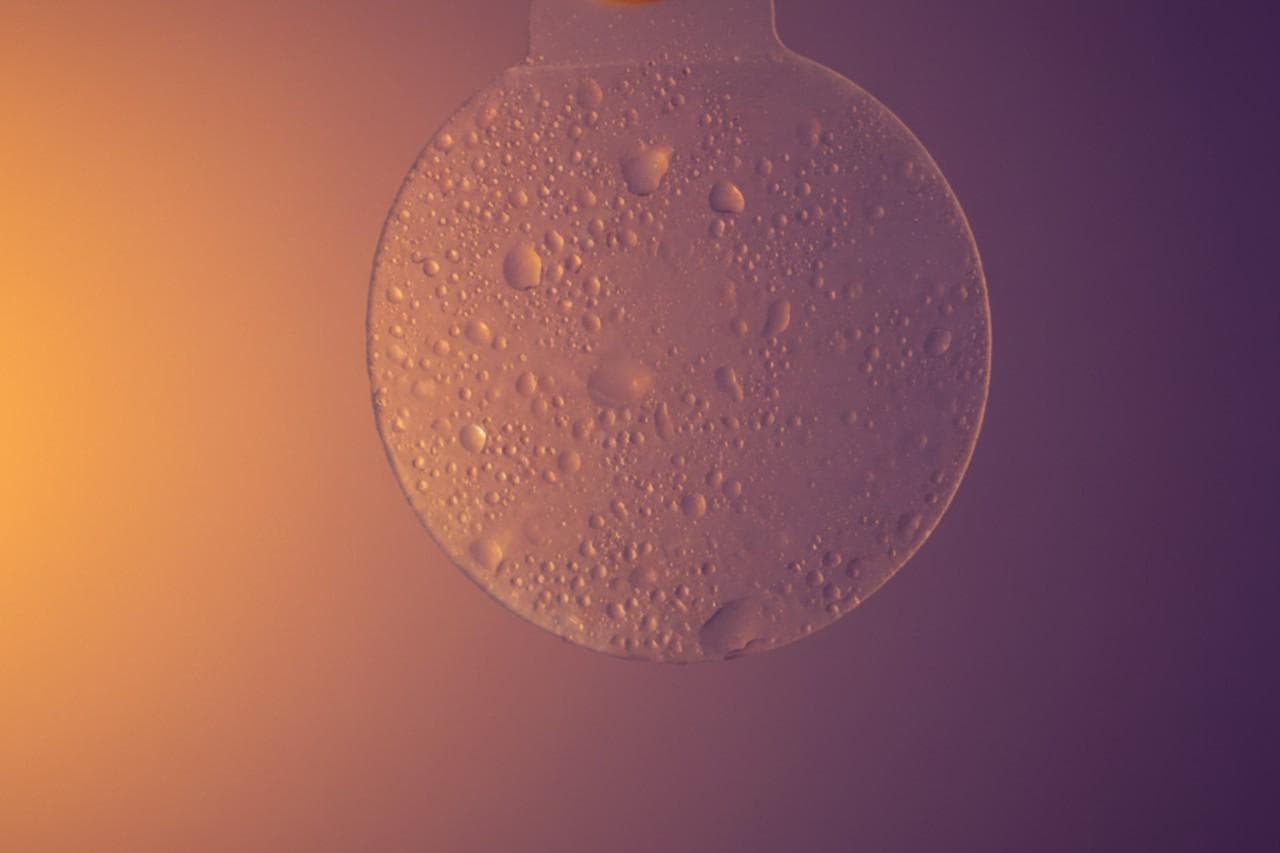
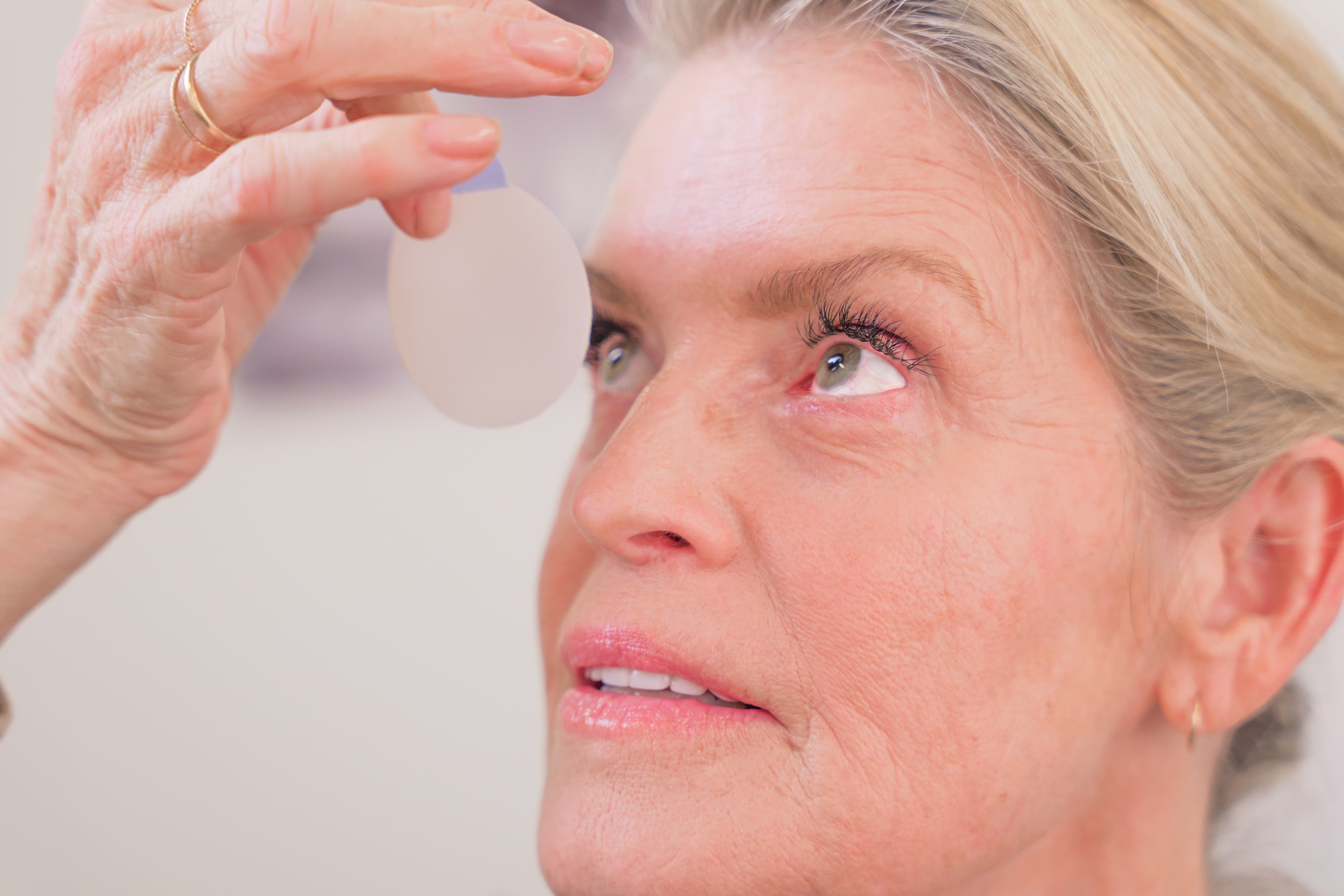
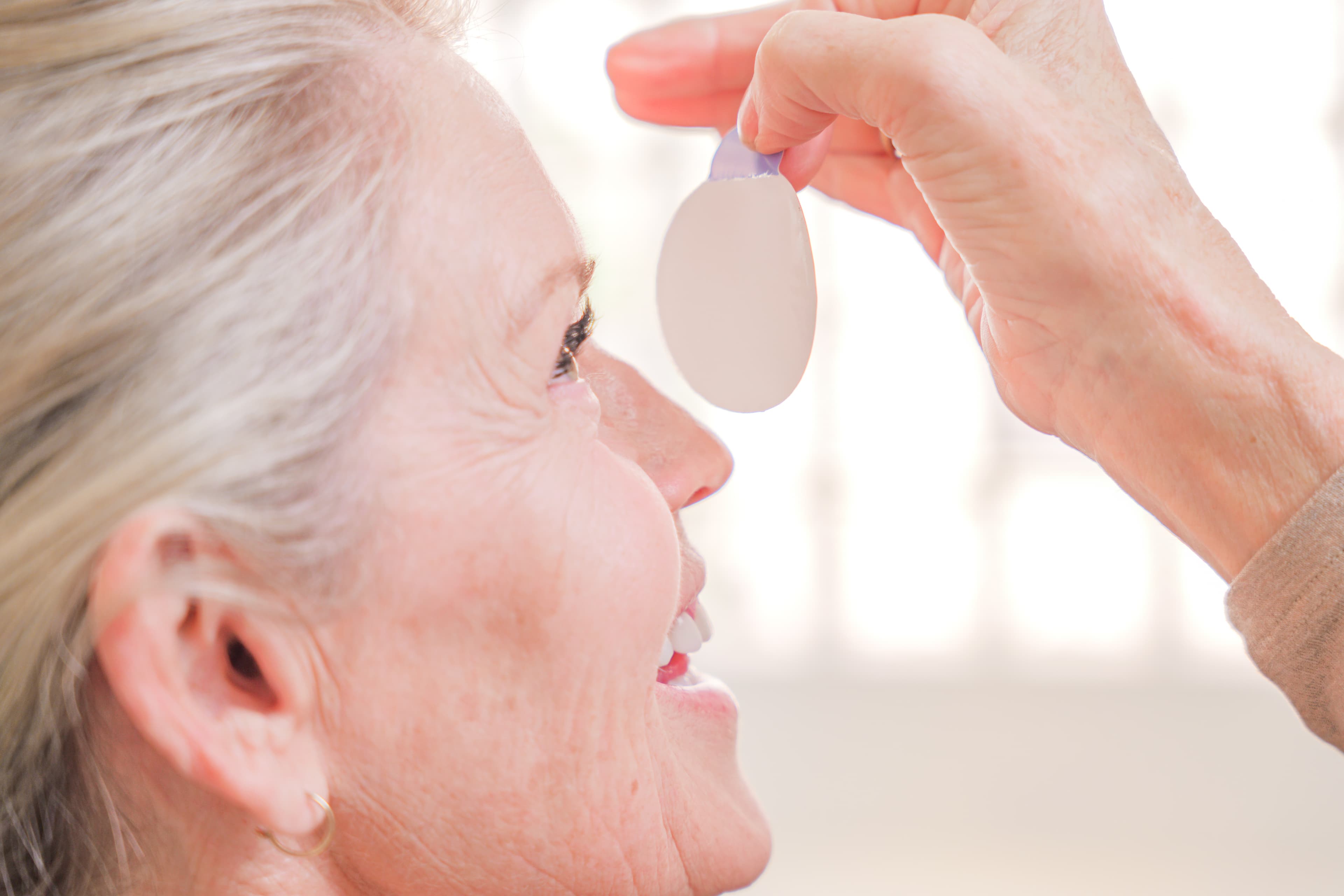
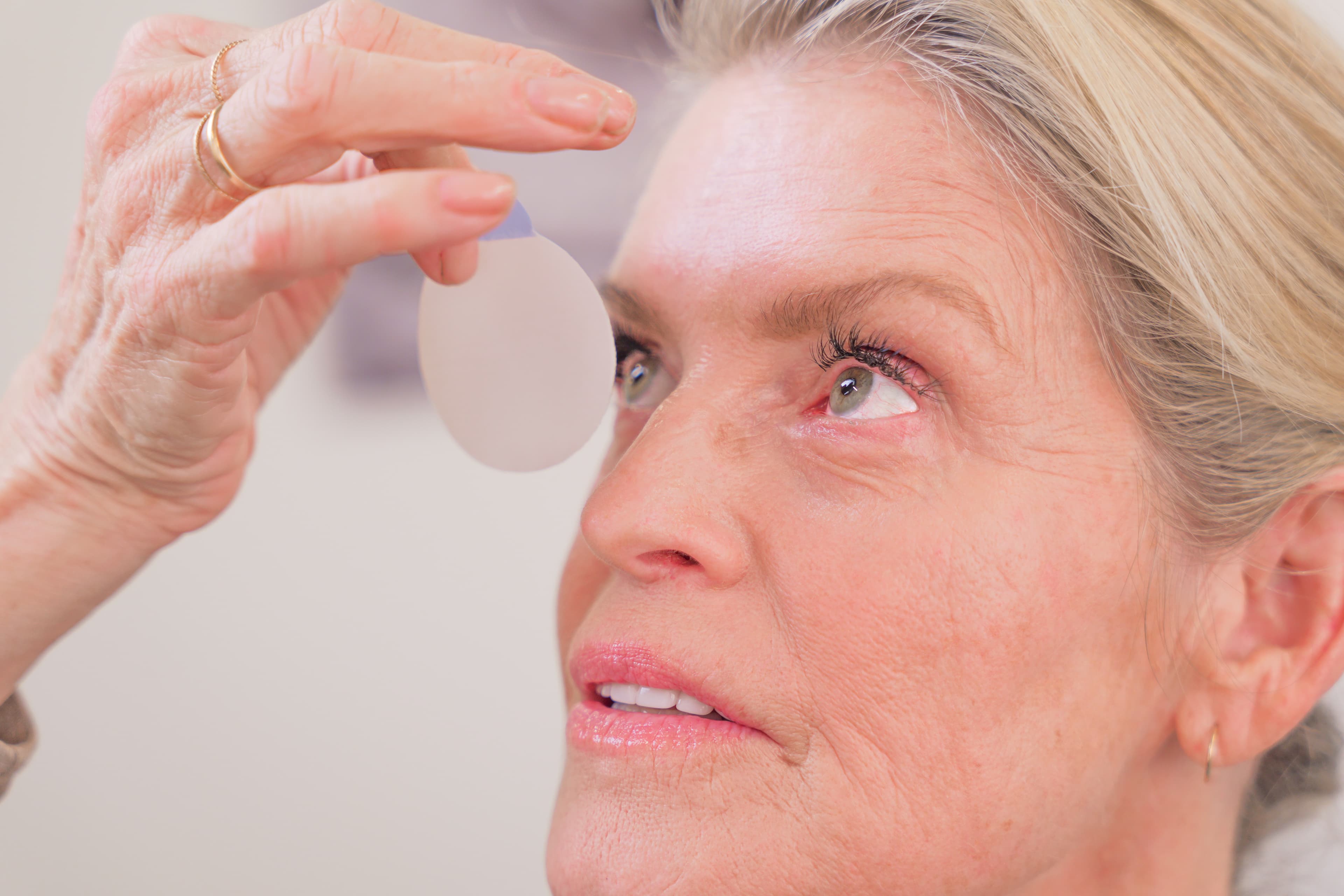
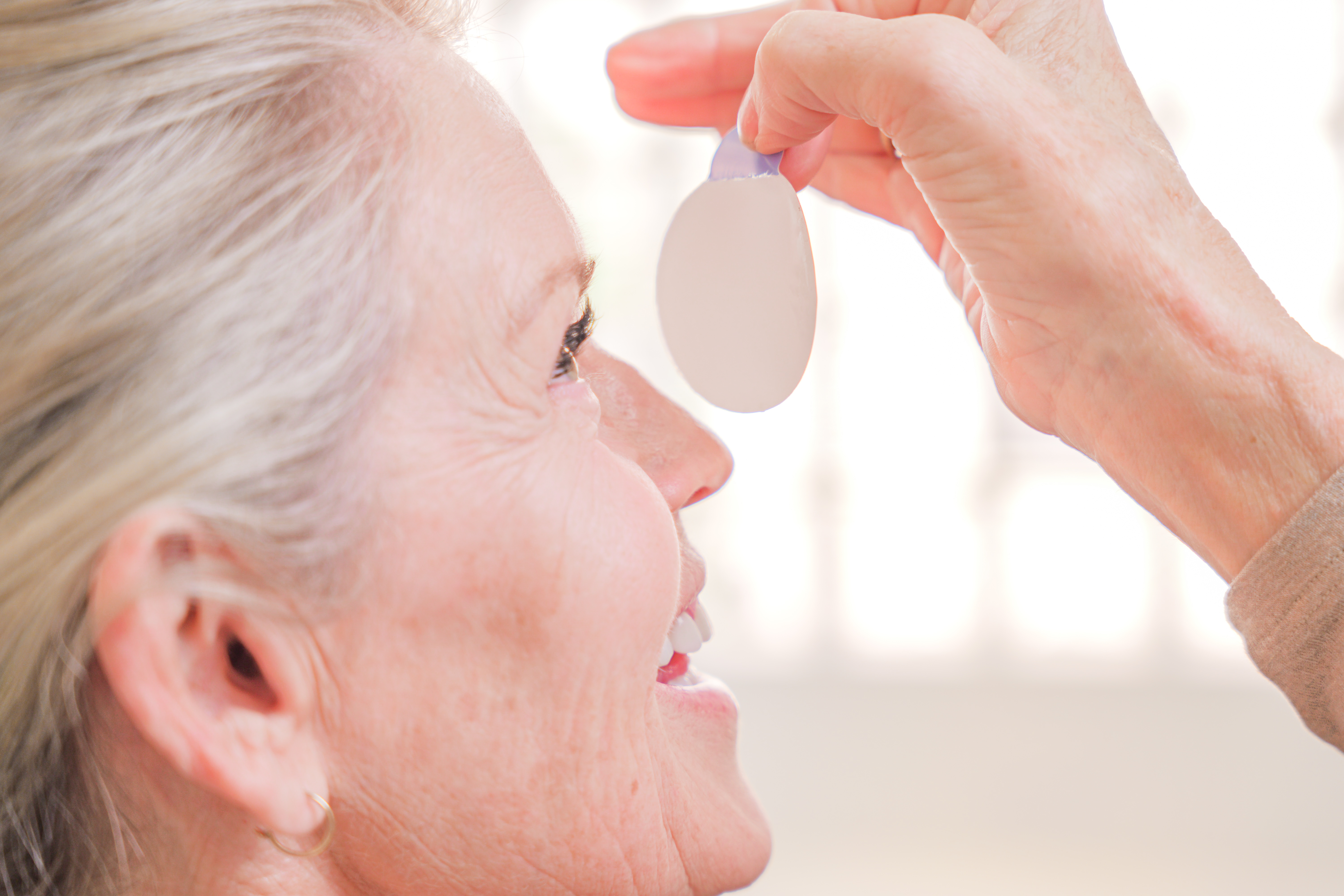
The important caveat is that lubrication treats the symptom, not the problem. If the eyelids are not closing, the cornea remains exposed, and no topical product fully compensates for that. For patients whose symptoms are severe or persistent despite lubricants, additional strategies — including mechanical approaches to keeping the eyelids closed during sleep, such as moisture chamber goggles or an overnight eye shield like OKO Deep Snooze — may be necessary. Your surgeon or cornea specialist can guide you through those options based on the degree of lagophthalmos and how the ocular surface is responding.
If your eyelid changes coincided with perimenopause or prior LASIK, those factors can compound the problem. I wrote about that combination in The Perfect Storm: Perimenopause, LASIK & Eyelid Lifts.
Frequently Asked Questions
Can blepharoplasty cause dry eye symptoms?
Yes, in a subset of patients. In many of these cases the issue is not dry eye in the traditional sense but rather overnight exposure — though only your eye doctor can determine the underlying cause. When blepharoplasty changes eyelid closure, the cornea may be exposed to air for hours overnight, causing the tear film to break down and the surface to become irritated. Patients with pre-existing dry eye tendencies are at higher risk of experiencing significant symptoms.
Is it normal for the eyes not to fully close right after blepharoplasty?
Yes, and this is one of the most important things I explain to patients before surgery. In the first days and weeks after eyelid surgery, some degree of incomplete closure is expected because swelling stiffens and bunches the tissue. As healing progresses and swelling resolves, closure typically returns. Early postoperative lagophthalmos is not cause for alarm in most cases — persistent lagophthalmos after full recovery is what warrants further evaluation.
What is lagophthalmos?
Lagophthalmos is incomplete eyelid closure. When it occurs during sleep, we call it nocturnal lagophthalmos. When it causes ocular surface irritation from overnight exposure, the resulting condition is called exposure keratoconjunctivitis.
Why are symptoms often worst in the morning after eyelid surgery?
Because the overnight period is when the exposure accumulates. With the eyelids partially open for hours, the tear film evaporates from the exposed corneal surface. By the time you wake up, the surface has been without adequate moisture for most of the night. Normal daytime blinking gradually re-lubricates the eye, which is why symptoms typically improve through the morning.
Can blurry vision after blepharoplasty be related to the surgery itself?
In some cases, yes. When eyelid closure is affected after blepharoplasty, the tear film becomes unstable on the exposed portion of the cornea. That instability can cause fluctuating blurry vision, particularly in the morning. If the blurry vision persists throughout the day rather than improving, it is worth prompt evaluation, as it may indicate a degree of exposure that extends beyond nighttime hours.
Does everyone with incomplete closure after blepharoplasty develop symptoms?
No. Mild degrees of lagophthalmos are often well-tolerated, particularly in patients with healthy, robust tear films. Symptoms tend to appear in patients whose baseline tear quality is already compromised — those with dry eye, meibomian gland dysfunction, prior LASIK, or hormonal tear changes. For these patients, even a small reduction in eyelid closure can tip the ocular surface into symptomatic exposure.
What treatments are commonly used?
The mainstay of initial management is nighttime lubrication, progressing from oil-containing drops to gels to ointments depending on the severity of symptoms. For patients who do not respond adequately to lubricants, mechanical strategies to improve eyelid closure during sleep — including moisture chamber goggles, specialized eye masks, and other approaches — are available. In rare cases of persistent, severe lagophthalmos, surgical revision may be discussed with the operating surgeon.
Want more plain-language guidance on protecting your eyes overnight? Sign up to get future posts from Dr. Sales delivered to your inbox, plus exclusive access to videos and free samples of OKO dry eye products.
Wondering whether your post-surgery eye symptoms are from overnight exposure? Take our free 1-minute quiz and we'll send a personalized one-pager to your inbox.