A cornea surgeon walks through preservative-free tears, gel drops, and ointments for nocturnal lagophthalmos — and explains why, past a certain point, the answer is not a different drop at all.
It humbles me every time a patient sits across from me in clinic, exhausted and frustrated, holding a paper bag full of eye drops they have already tried. They have cycled through every product on the pharmacy shelf. Nothing has worked. And until the underlying mechanism is explained, no product is going to solve it — because lubrication and exposure are two different issues.
The condition behind many of these cases is called nocturnal lagophthalmos — a term that simply means the eyelids do not fully close during sleep. For patients who have healthy, robust tear films, this is not necessarily a problem. The eye compensates. But for patients whose tear film is already compromised — whether from dry eye tendencies, meibomian gland dysfunction, prior LASIK, hormonal changes, thyroid eye disease, or facial nerve conditions like Bell's palsy — even a small gap in eyelid closure overnight is enough to cause real suffering.
What Nocturnal Lagophthalmos Is
Nocturnal lagophthalmos is when your eyelids do not fully close when you are asleep. A surprising number of people have some degree of this and never know it. The problem announces itself through symptoms: burning or blurry vision when you wake up, a gritty or painful sensation in the morning that gradually improves as the day goes on, or — in more severe cases — pain that wakes you in the middle of the night. When incomplete eyelid closure causes these symptoms, we call it exposure keratoconjunctivitis, which is irritation and breakdown of the ocular surface from prolonged exposure to the air.
In my experience, this pattern of symptoms is easy to overlook — including for eye doctors. Part of the reason is that by the time the patient arrives in clinic, hours have passed since they woke up. The eye has had thousands of blinks to re-lubricate itself, and the exam often looks deceptively normal. What tells the story is what the patient describes: the pattern of their symptoms, when they occur, and how they evolve through the day. If your symptoms are reliably worst the moment you open your eyes and improve as the morning progresses, that pattern is worth discussing with your eye doctor, as overnight exposure is one possible explanation.
Why Drops Fall Short Overnight
Think of the surface of your eye as a hot pan on a stove with a thin layer of liquid on it. That liquid begins to evaporate off the surface roughly every five seconds when the eye is open. You cannot cheat the physics of this — the longer the eye is exposed to air without blinking, the more moisture evaporates from the surface. During the day, blinking every five seconds continuously replenishes that moisture. At night, with the eyelids closed, the eye takes care of itself without any help.
But when the eyelids stay partially open for six, seven, or eight hours, you are asking a single application of eye drops to do what thousands of blinks do during the day. No drop can accomplish that. The exposure is the problem, and lubrication — however well-chosen — only partially addresses it.
Drop-by-Drop Comparison: Tears, Gels, and Ointments
That said, lubrication is still the right first step for mild cases, and the differences between products matter enormously. All nighttime eye lubricants vary primarily in two dimensions: viscosity, meaning how thick they are, and oil content. These two parameters determine how long the product stays on the eye's surface before evaporating or running off.
At one end of the spectrum are standard preservative-free artificial tears — products like Refresh Plus. These are thin, watery, and comfortable, but they evaporate quickly. Applied at bedtime, a watery drop may offer little to no protection by midnight. They have their place for daytime symptom relief, but they are poorly suited to overnight protection.
A step up are drops that incorporate oils into their formula — products like Retaine MGD, Systane Balance, or Refresh Mega-3. The oil mimics the natural protective function of the meibomian glands, which produce an oily layer that slows tear evaporation from the eye's surface. These products stay on the eye meaningfully longer than watery tears and perform better overnight for many patients.
More viscous still are gel formulations like Genteal Gel. These coat the surface more thoroughly and resist evaporation longer because their thickness slows the rate at which moisture is lost. Many patients with moderate nocturnal lagophthalmos find gels to be the sweet spot — effective enough to help, without the downsides that come with ointments.
At the far end are oil-based ointments — Refresh PM, Systane Nighttime. Because they are oils rather than water, they essentially do not evaporate, and they provide the most durable protection available in a bottle. For patients with significant nighttime exposure, ointments can be genuinely transformative. The trouble is usability. Ointments blur vision immediately after application, which is fine at bedtime but inconvenient if you wake up during the night. They leave the eyelids crusty in the morning. And because oil does not bind to the water-based ocular surface, applying the ointment itself can be an ordeal — getting it to release from the tube and stay where you put it requires patience many patients eventually run out of.
When Mechanical Protection Wins
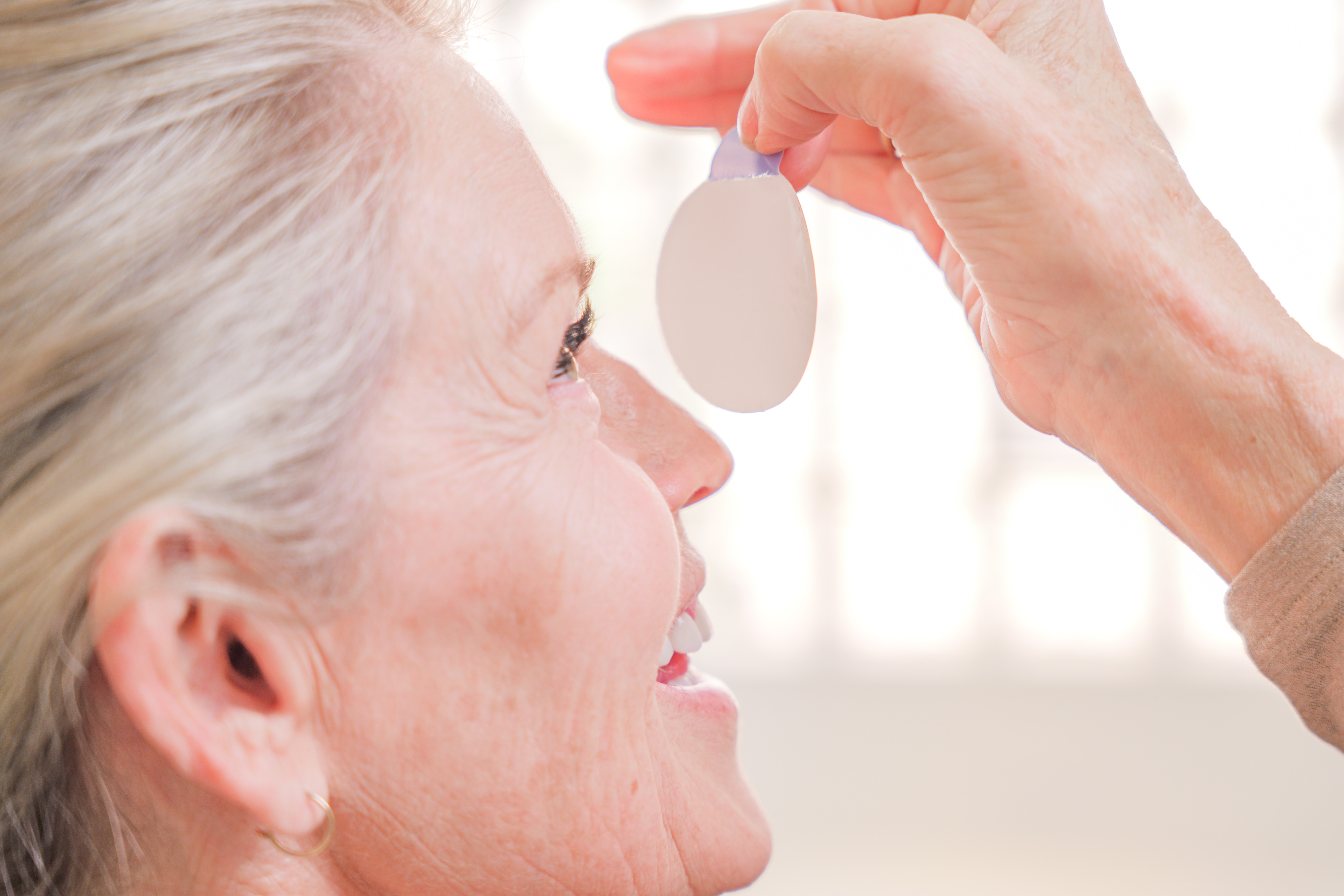
Here is the principle that the eye drop aisle cannot solve for you: if the eyelids are open, the eye is exposed, and no drop eliminates that exposure. What does eliminate it is closing the eyelids. When the eyelids are shut, the problem of evaporation goes away entirely. The eye takes care of itself — the way it was designed to. This is why patients with moderate to severe nocturnal lagophthalmos often reach the limits of lubrication therapy and need to think about mechanical approaches to eyelid protection during sleep.
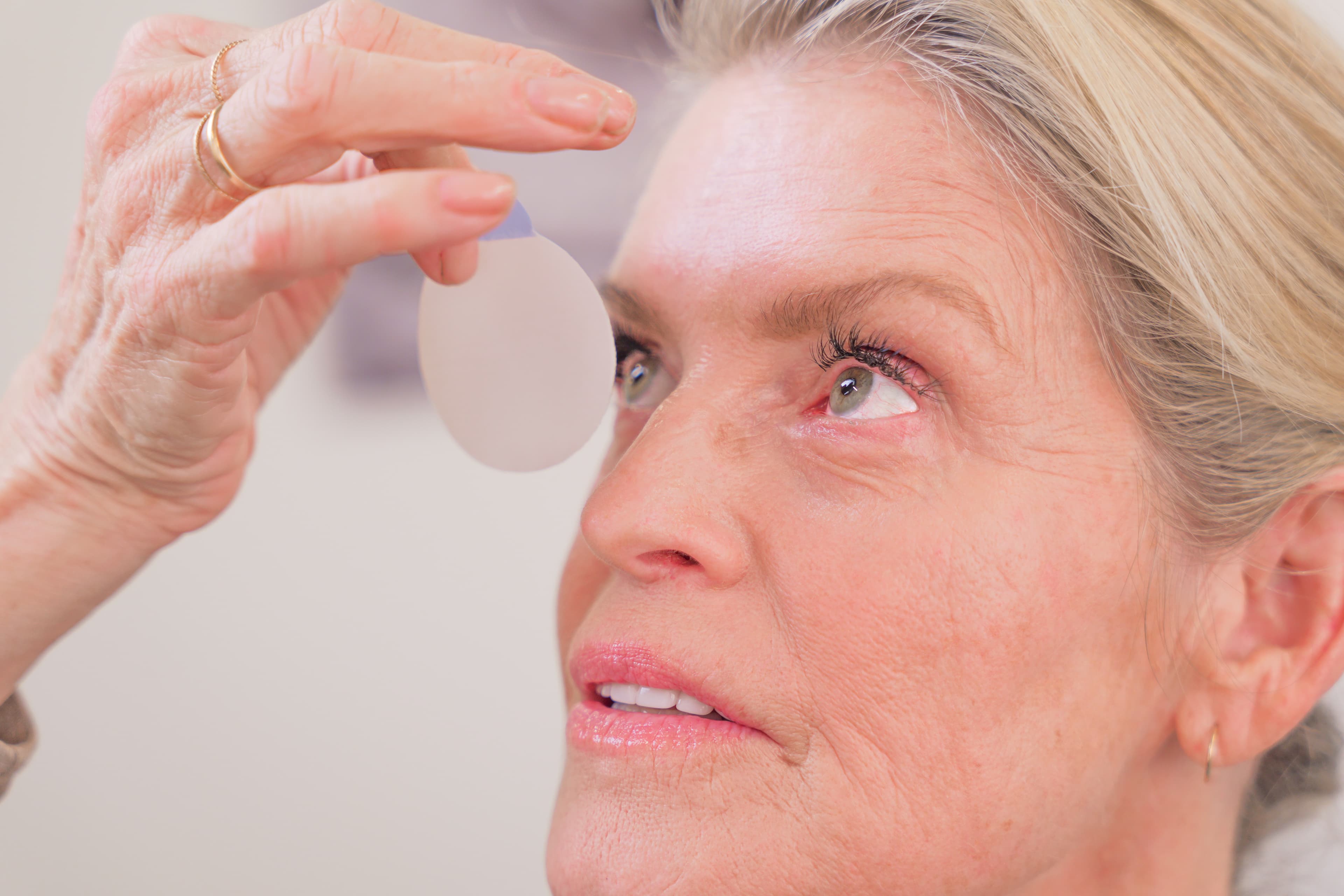
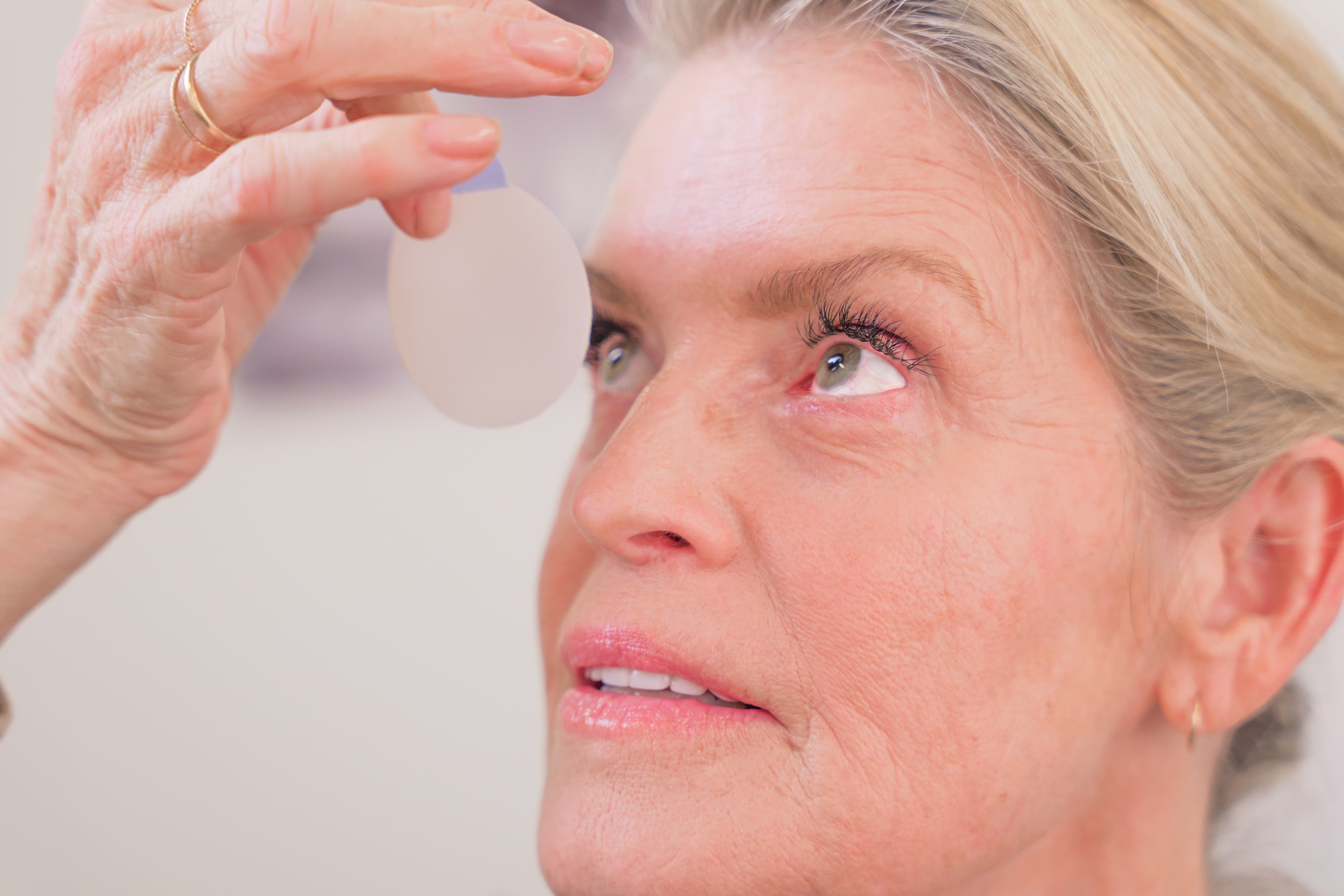
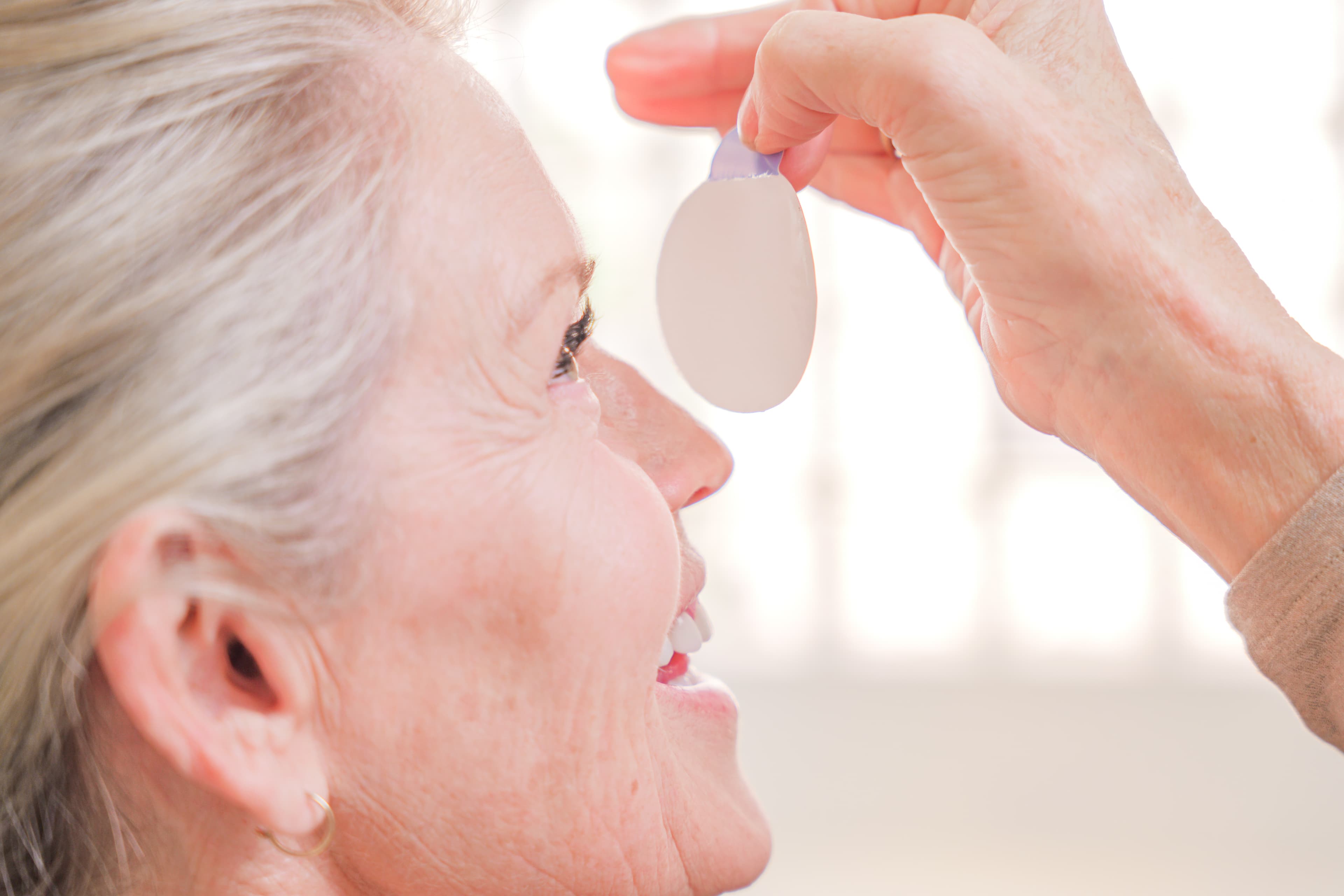
The goal of mechanical protection is simple: recreate what the eyelids are supposed to do on their own. There are several ways to accomplish this — from moisture chamber goggles and taping to a purpose-built overnight eye shield like OKO Deep Snooze — and the right approach depends on the severity of the exposure, the underlying cause, and honestly, what a given patient is willing to tolerate as part of their nightly routine. For now, the key concept is this — if you have been through multiple lubricating products without relief, the answer is probably not a different drop. It is addressing the exposure itself.
One common cause of this kind of overnight exposure deserves its own discussion: eyelid surgery. If your symptoms started after a cosmetic lid lift, see Lagophthalmos After Blepharoplasty: Why It Happens and What to Do.
Frequently Asked Questions
What is nocturnal lagophthalmos?
Nocturnal lagophthalmos is incomplete eyelid closure during sleep. Many people have a mild form without knowing it. It becomes clinically significant when it causes symptoms — typically burning, blurry vision, or pain upon waking — that we call exposure keratoconjunctivitis.
Can sleeping with my eyes partially open really cause that much irritation?
Yes — and often more than patients expect. The ocular surface is exquisitely sensitive, and prolonged exposure to air overnight, even through a small gap, can cause significant breakdown of the tear film and the surface cells beneath it. The key word is prolonged: hours of exposure adds up in a way that a brief moment of dryness during the day does not.
Why are eye symptoms like these worst in the morning and better by afternoon?
For people whose morning irritation is related to overnight exposure, the surface dries out overnight and gradually recovers with normal blinking during the day. By the time you arrive in a doctor's office for an afternoon appointment, your eye may look and feel nearly normal — which is one reason this connection is easy to overlook. The timing and pattern of symptoms is worth describing in detail to your eye doctor.
Why do artificial tears only help me temporarily?
Watery drops evaporate quickly, especially when the eye remains exposed to air. A drop applied at bedtime may offer little protection by the middle of the night. Products with oil or greater viscosity — gels and ointments — stay on the surface longer and generally perform better for overnight protection.
Are ointments always the best option for nighttime use?
Ointments provide the most durable protection available in a topical lubricant, but they come with real usability drawbacks: blurry vision immediately after application, morning crusting, and difficulty getting the product to stay in the eye. For many patients, a gel formulation is the better balance of effectiveness and tolerability. The 'best' product is the one you will actually use consistently.
Can someone have severe symptoms with a normal-looking eye exam?
Absolutely, and this is one of the most important things I tell patients. In exposure keratoconjunctivitis, the injury happens overnight and begins healing with the first blinks of the morning. By the time you are seen in clinic, the surface has often recovered substantially. A normal exam does not mean the symptoms are not real — it means the timing of the exam missed the window of injury.
What risk factors make nocturnal lagophthalmos more likely to cause symptoms?
Patients with dry eye tendencies, meibomian gland dysfunction, prior LASIK or PRK, eyelid surgery, hormonal changes around perimenopause or menopause, incomplete blinking habits, thyroid eye disease, or facial nerve conditions like Bell's palsy are all at higher baseline risk. In these patients, even a small degree of nighttime eyelid opening can tip the ocular surface into symptomatic exposure.
Want more plain-language guidance on protecting your eyes overnight? Sign up to get future posts from Dr. Sales delivered to your inbox, plus exclusive access to videos and free samples of OKO dry eye products.
Not sure whether your morning eye symptoms point to overnight exposure? Take our free 1-minute quiz and we'll send a personalized one-pager to your inbox.